
TKS x Lovable Challenge
A winning TKS challenge recommendation for Lovable: a creator-led template marketplace where every template becomes its own search entry point, modelled at 75M+ new users and $450M+ in annual recurring revenue without paid acquisition.
TKS, The Knowledge Society, is a ten month innovation program for teenagers that runs challenges with real companies, and I did this one through them. The company was Lovable, the AI app builder that passed $100 million in annual recurring revenue inside a year and raised a Series B at a $6.6 billion valuation. We took the growth brief: how might Lovable acquire new users without relying on paid acquisition? The challenge itself ran three weeks, and winning your cohort bought you more work rather than less: another stretch on top to prepare for the global presentation.
Lovable was not short of users. It was short of a growth loop, and we split that into three failures. Growth was non-compounding, running on paid ads, outreach and word of mouth, all of which produce linear results and stop the moment the effort stops, typically costing 20% to 30% of annual growth potential. There was no ecosystem, and SaaS products without network effects commonly see 70% to 90% annual churn while community-driven platforms retain users two to three times longer. And there was nothing to discover: with the homepage and paid ads as the main entry points, more than half of the available organic traffic was going uncaptured.
Our recommendation was a creator-led template marketplace. Creators publish templates and earn 70% of each sale plus 10% of referral memberships through affiliate links, with view-based payouts on free templates, so supply keeps growing without Lovable paying for it. Every template and category automatically generates its own /template and /create pages, turning the library into thousands of indexed landing pages aimed at long-tail search intent. Around that sit the things that make a marketplace stick: browsing by category and style, following and favouriting creators, and certified partners who can walk beginners through onboarding.
We did not stop at describing it. We built the marketplace as a working prototype on Lovable itself and demoed it live in the presentation.
Three platforms carried the evidence. Webflow opened its marketplace in 2013, but it only took off once creators were paid properly, up to 80% for active designers and 60% for passive ones. The library passed 1,500 templates, active sites nearly doubled from roughly 480,000 to 930,000 in a single year, market share went from 0.25% to 0.40%, and over the following four years it reached 1.2% of the CMS market.
Canva proves the SEO half. Roughly 21,000 template pages and 2,000 create pages pull an estimated 19.5 million organic visits a month. We modelled that at a deliberately conservative 5% freemium conversion rather than Canva's blended 9%, which gives about 975,000 new paid users a month, 11.7 million a year, and at $120 a year roughly $1.4 billion in annualised gross revenue potential.
Framer is the closest analogue and the cleanest arithmetic. It pays creators around $6.5 million a year, and its 1,400 free public templates have drawn 21.3 million views, averaging about 16,000 views each. At that rate another 100 templates is roughly 1.6 million more views, which at a 10% remix rate is over 160,000 new projects. Applying a 2% paid conversion to the 2.1 million remixes already on record gives more than 42,500 customers acquired with no ad spend at all.
We validated demand rather than assuming it. A poll of more than 100 students, the target early-user demographic, returned 80% who said they would definitely use a Lovable-native template marketplace and 93.3% positive or neutral. Two working software engineers reviewed the proposal and landed on the same point independently: tools like this run on word of mouth, and more indexed pages means more surfacing in both search results and LLM answers.
Put together, we modelled the marketplace at 75 million or more new users and $450 million or more in additional annual recurring revenue, none of it bought. We costed the downside too: low-quality templates poisoning first impressions, a marketplace that acquires without retaining, and thinner short-term margins as free usage grows, each with a mitigation. The rollout ran ten to fifteen months, opening invite-only with certified designers, expanding to a controlled subset while pushing inventory past 1,000 templates and integrating the affiliate program, then a full release with creator incentives raised to 85% to 95%.
We won the Toronto cohort. That took us to the worldwide session alongside the winning teams from the other TKS cities, New York and Dubai among them, where each team presented its recommendation to Lovable. We gave ours to Sophia Nabil Gustafsson.
Lovable runs a template marketplace today at lovable.dev/templates. The templates on it are published by community creators rather than by Lovable alone, and the most popular ones have been remixed hundreds of times.
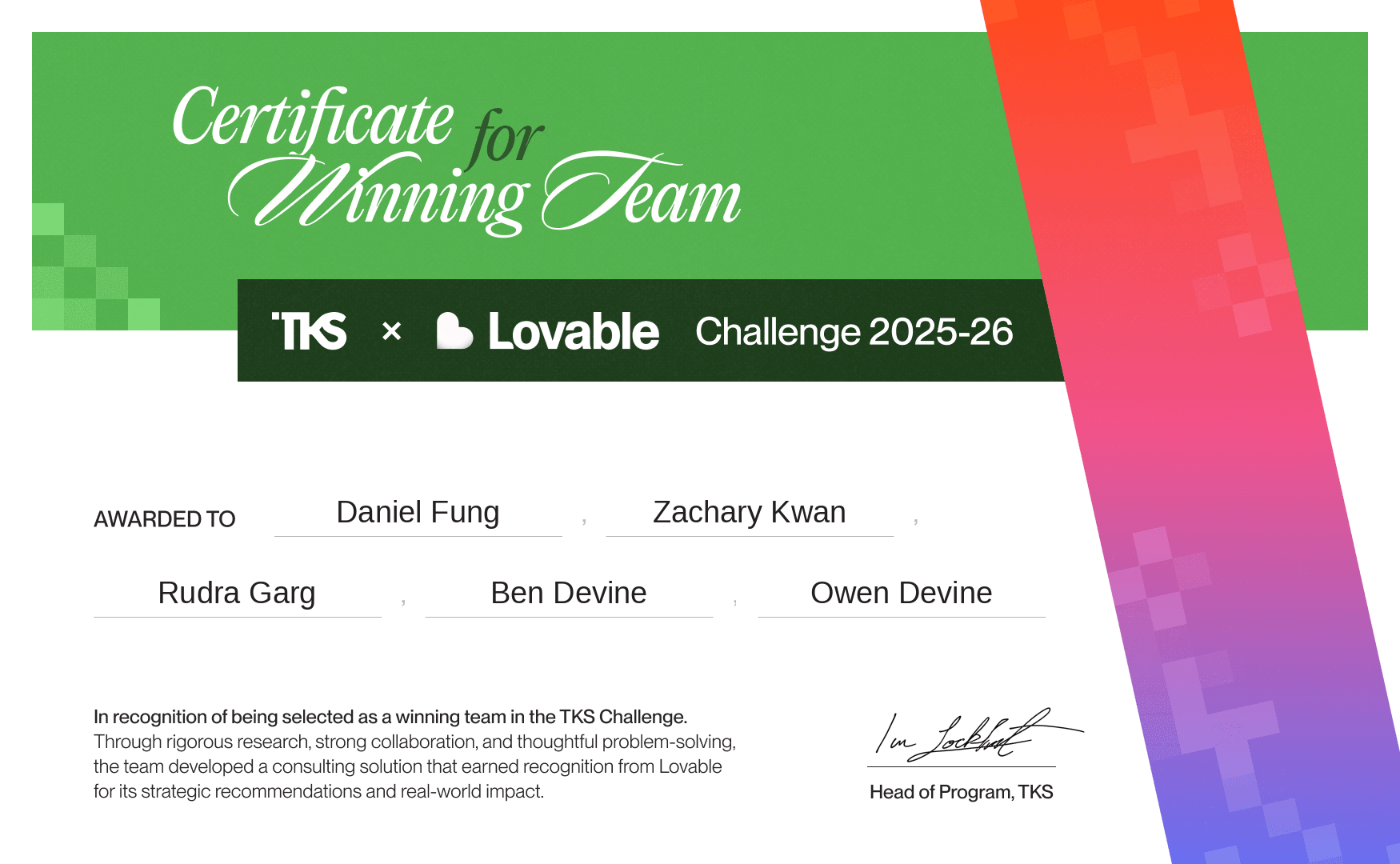
Winning team, TKS x Lovable Challenge 2025-26 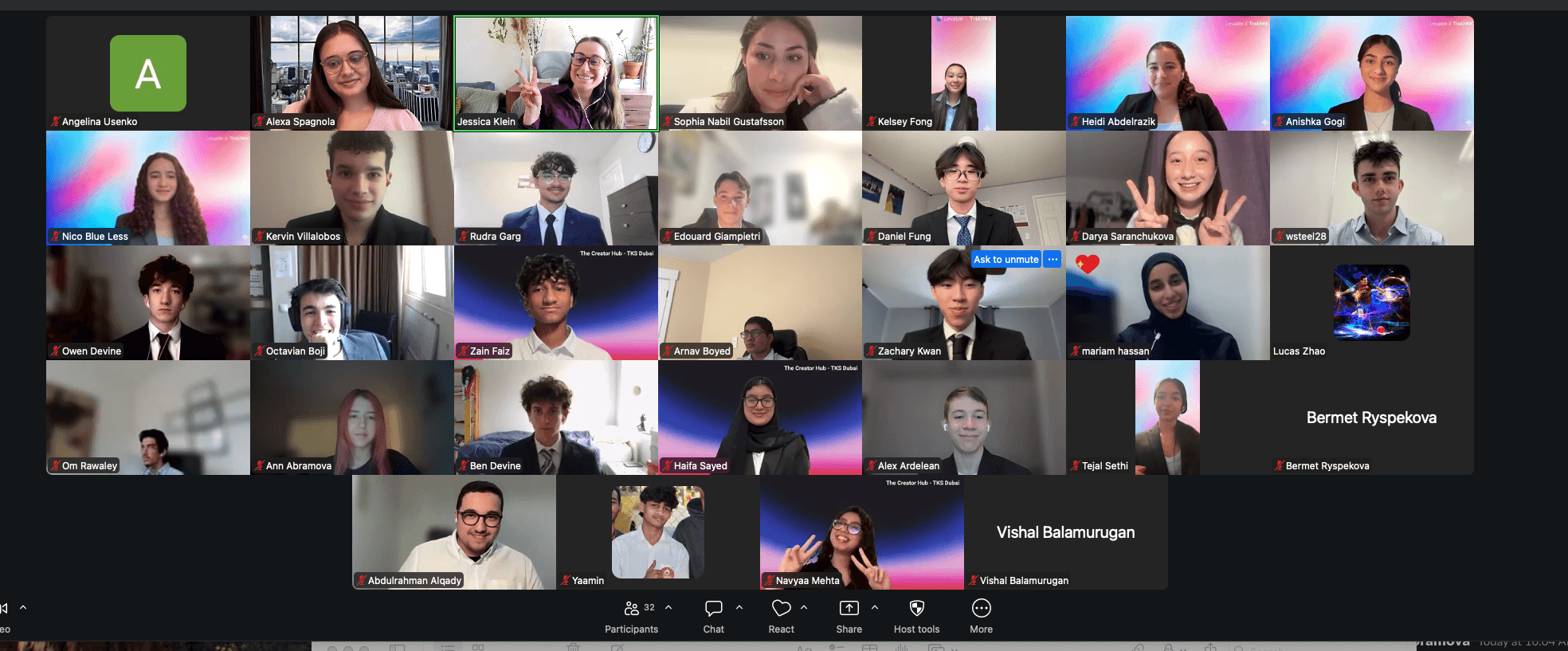
Presenting to Lovable with the winning teams from the other cohorts 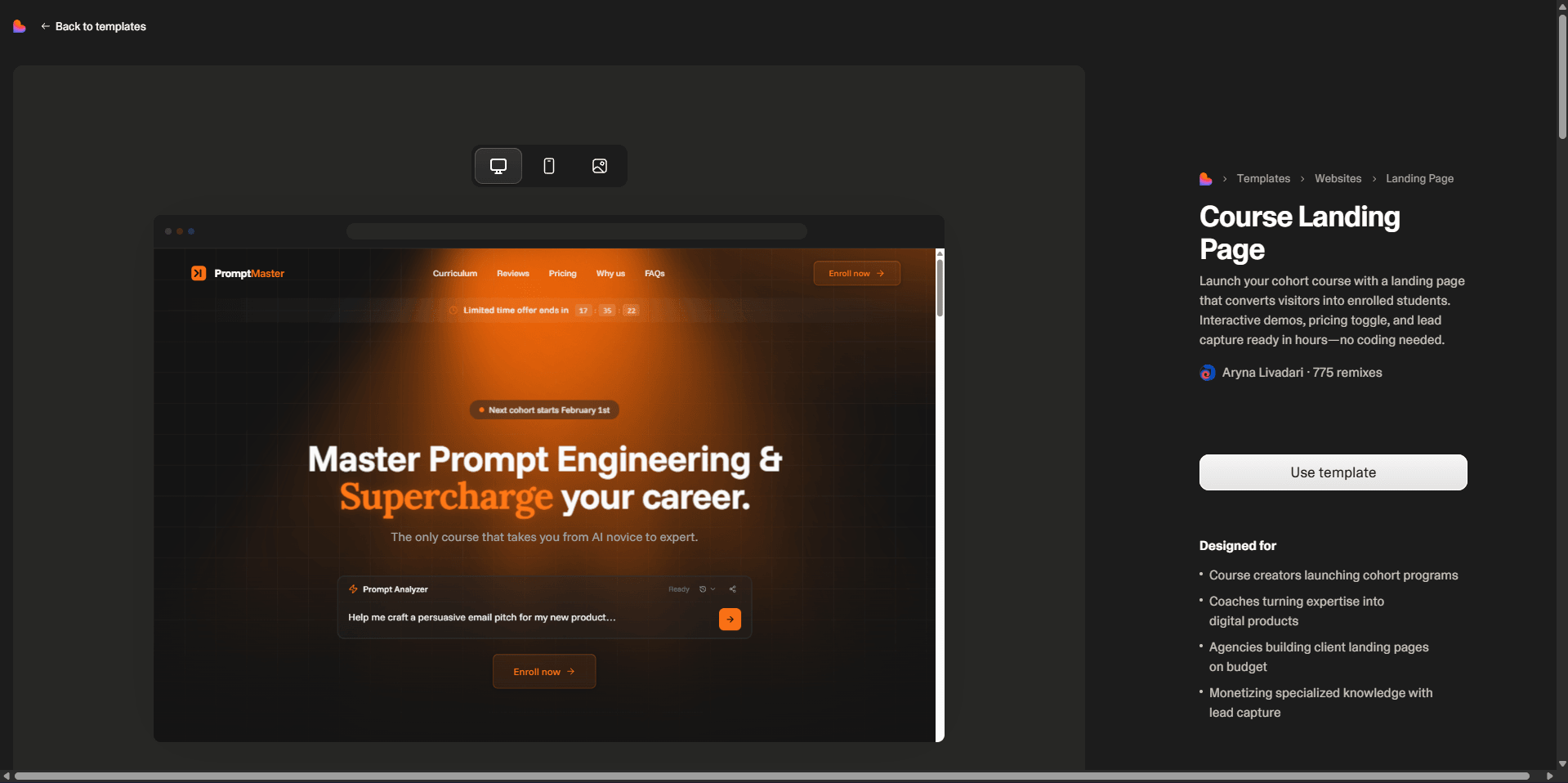
A community-built template on Lovable today, remixed 775 times 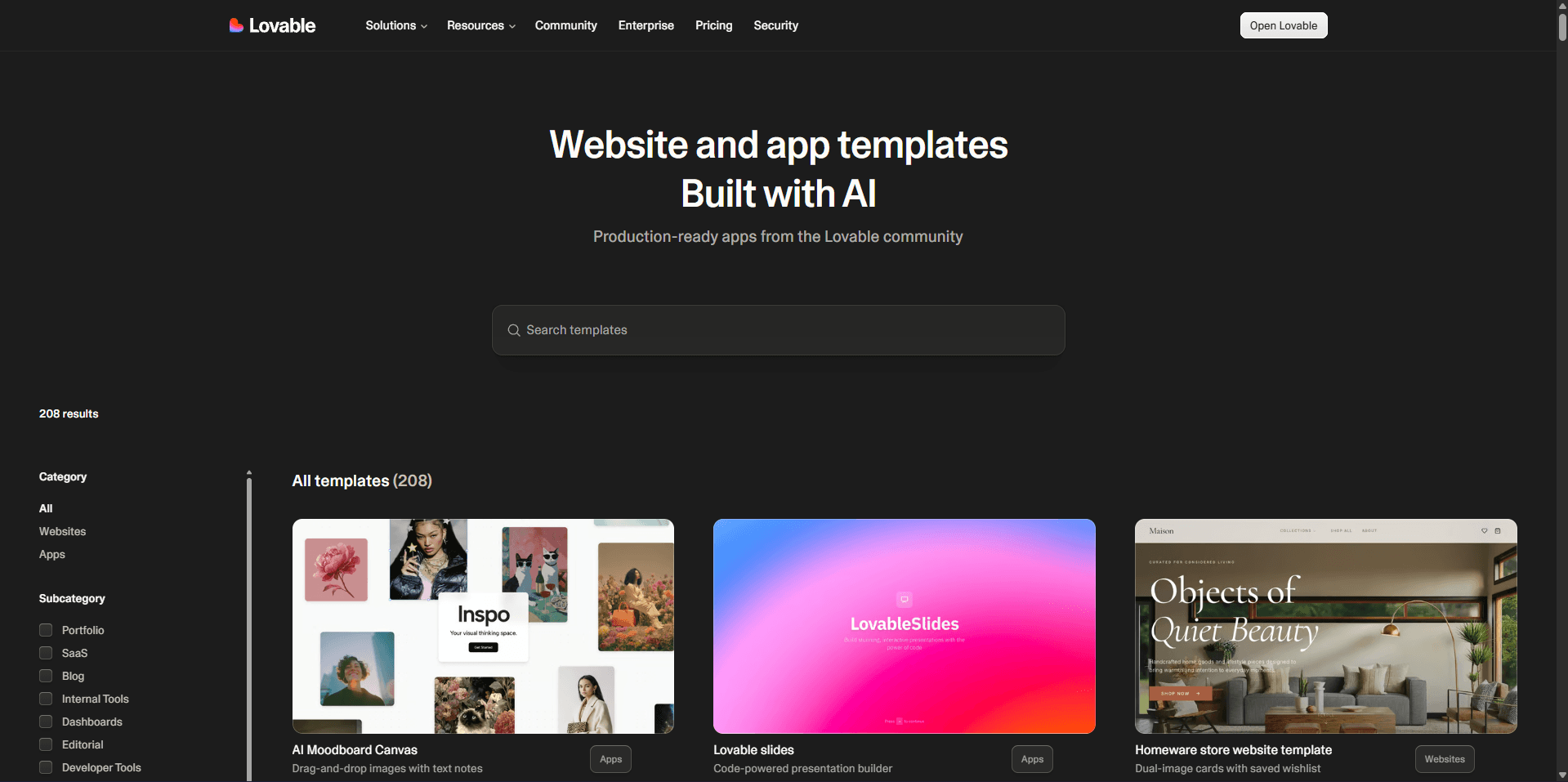
The Lovable template marketplace, stocked by community creators
Related work
TKS x Microsoft Challenge
A one week TKS challenge on Microsoft data centres: an operating system that reallocates GPUs in real time, worth $2B+ in yearly revenue and $26M+ in saved energy.
View projectAI & robotics · January 2026AI Trash Sorting Robot
A trash can that sees what is being thrown out and puts it in the correct bin, saving you the hassle and keeping recyclables out of the landfill.
View project